
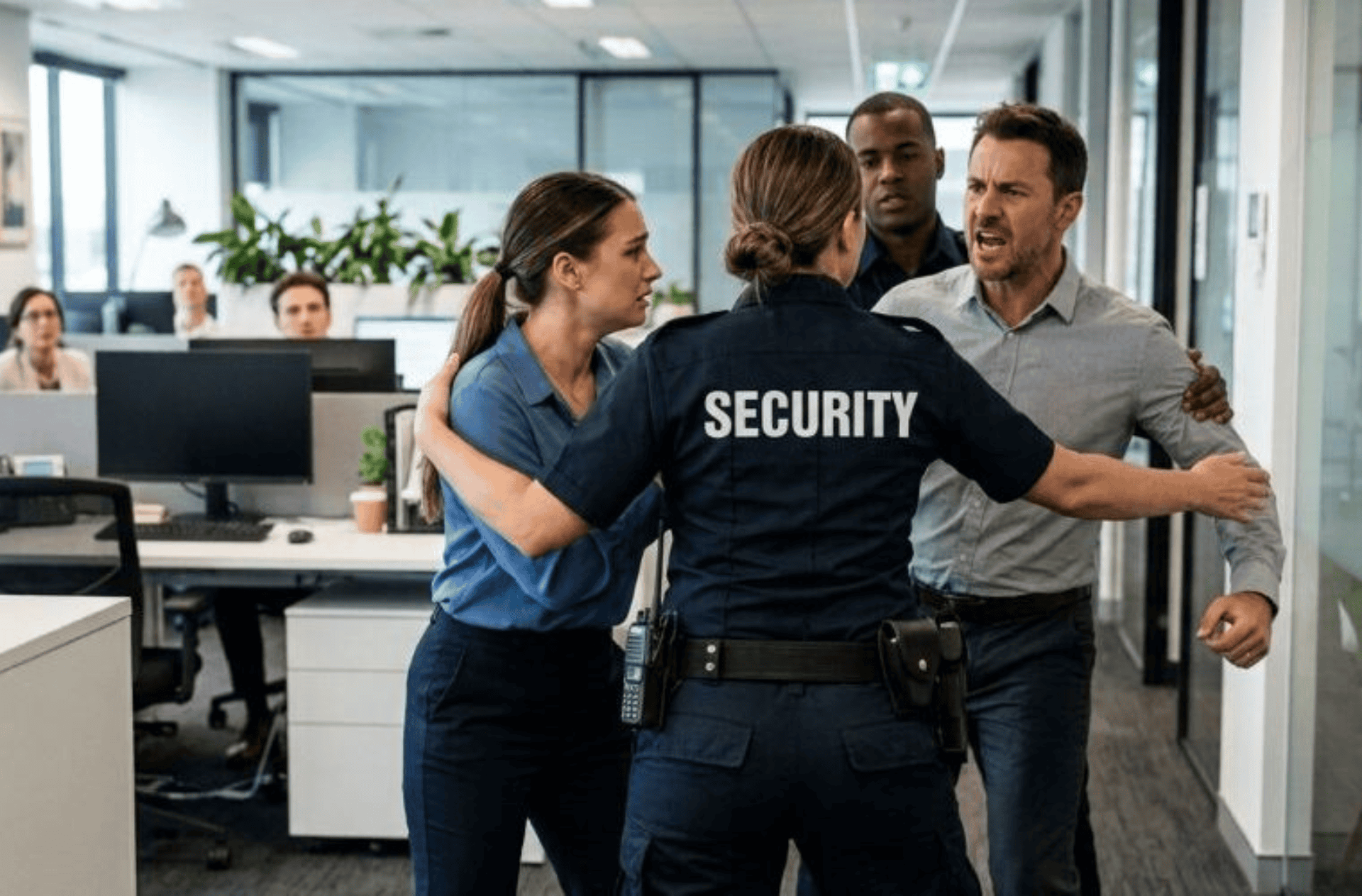
Pre-Assault Indicators: Why Recognizing Warning Signs Matters for Ontario Security Guards
Last Updated on Oct 11, 2026
Imagine you’re working security at a shopping centre in Ontario.
A customer has been asked to leave after becoming aggressive toward an employee. At first, they’re simply arguing. Then their behaviour begins to change.
They stop speaking. Their hands tighten into fists. They shift their stance and begin moving closer.
What should you do?
For security guards, recognizing these changes is an important part of assessing risk and responding appropriately before a situation becomes physical.
These behaviours are often called pre-assault indicators — potential warning signs that someone may be preparing for a confrontation.
Understanding them is a valuable part of the situational awareness and professional judgement required in security work.
And for anyone completing Ontario’s mandatory 40-hour security guard training, they’re an excellent example of why learning to observe, communicate, and assess risk matters beyond the provincial licensing test.
Security Guard Training Is About More Than Passing an Exam
In Ontario, individuals must complete an approved 40-hour security guard training program, including the required emergency first aid and CPR component, before becoming eligible to take the provincial security guard test.
The training introduces aspiring guards to essential aspects of the profession, including legal responsibilities, communication, report writing, emergency response, and other foundational security skills.
These subjects aren’t simply information to memorize for an exam.
They’re part of preparing for situations you may encounter once you’re working.
Consider a confrontation involving an increasingly aggressive individual.
You need to recognize what’s happening, understand your responsibilities, communicate effectively and make decisions that prioritize safety.
That’s where understanding pre-assault indicators becomes especially valuable.
What Are Pre-Assault Indicators?
Pre-assault indicators are physical or verbal behaviours that may appear before an act of violence.
They can include changes in posture, hand movements, facial expressions, personal space, and communication.
However, it’s important to understand that no single behaviour reliably predicts an attack.
Someone may clench their fists because they’re anxious. They may become quiet because they’re overwhelmed. They may look around because they want to leave.
Security guards should therefore consider the entire situation rather than making assumptions based on one gesture.
When several concerning behaviours occur together, particularly alongside threats or increasing aggression, they may indicate a heightened risk that requires attention.
Eight Warning Signs Ontario Security Guards Should Recognize
1. Target Glancing
During a tense interaction, an individual may repeatedly look at specific parts of a security guard’s body or equipment.
This might include their face, hands, torso, or radio.
Repeated glances toward these areas may suggest the person is assessing their surroundings or considering physical action.
Example: You’re speaking with someone who has been asked to leave a retail property. They repeatedly glance at your radio while making threatening comments.
The behaviour alone doesn’t establish intent, but it may be relevant when considered alongside the person’s words and actions.
2. Shifting Into a Confrontational Stance
A person may change their body position during an escalating interaction.
They might turn slightly sideways, place one foot behind the other or raise their hands.
This positioning is sometimes referred to as blading the body.
Example: After being asked to leave a store, an individual shifts their stance, raises their hands, and says, “Are you going to make me?”
The combination of threatening language and changing posture suggests the situation may be escalating.
3. Clenching Hands or Tightening the Jaw
Physical tension can become more noticeable when someone is experiencing heightened stress or anger.
Possible signs include:
- Making fists
- Repeatedly opening and closing the hands
- Tightening the jaw
- Grinding teeth
- Raising the hands toward the face
Example: During a verbal disagreement, an individual begins breathing heavily and repeatedly clenching their fists.
These changes should prompt the guard to reassess the interaction and consider whether additional distance or assistance is appropriate.
4. Sudden Silence
An individual who has been shouting or arguing may suddenly become quiet.
Sometimes this indicates that they’re calming down. In other circumstances, especially when accompanied by threats or physical tension, it may be a warning sign.
Example: Someone has been loudly refusing to leave a property. They suddenly stop speaking and stare directly at the guard.
Rather than assuming the interaction is resolved, the guard should continue observing and assessing the situation.
5. Invading Personal Space
Maintaining appropriate distance is an important part of personal safety.
Someone who repeatedly moves closer, leans forward aggressively, or refuses to respect physical boundaries may be increasing the risk of confrontation.
Example: You step backward during a tense conversation, but the individual immediately steps forward again.
This repeated closing of distance may warrant greater caution and a change in how the interaction is managed.
6. Grooming Gestures
People experiencing stress sometimes make repetitive movements involving their clothing, hair or face.
These may include:
- Pulling up sleeves
- Adjusting clothing
- Rubbing the face or head
- Running hands through the hair
These gestures are common and aren’t necessarily signs of aggression.
However, when they occur alongside threats, confrontational positioning, or other concerning behaviours, they may contribute to an overall assessment of escalating risk.
7. Scanning the Surroundings
During a tense interaction, someone may repeatedly look toward entrances, exits, nearby people, security cameras or objects within reach.
This behaviour can have many explanations, including anxiety or a desire to leave.
Example: An individual making threats repeatedly looks toward an exit and checks where other security personnel are standing.
The guard should consider this behaviour in context while remaining aware of the surrounding environment.
8. Threats and Changes in Tone
Verbal threats are among the clearest signs that an interaction may be becoming more dangerous.
Examples include:
- “What are you going to do about it?”
- “You’re going to regret this.”
- “I’d like to see you try.”
- “Don’t come any closer.”
Changes in speaking volume, tone, or pace may also be relevant.
A person making threats while displaying increasing physical tension or repeatedly closing distance may present a heightened risk.
Observation: One of the Most Important Security Skills
Observation is a fundamental part of professional security work.
It’s also one of the skills that becomes particularly important when recognizing possible pre-assault indicators.
A security guard needs to pay attention not only to what someone says, but also to changes in their behaviour and the surrounding environment.
For example, consider these two situations.
Situation A: A customer becomes frustrated, raises their voice, and complains about being asked to leave.
Situation B: A customer becomes frustrated, begins making threats, clenches their fists, and repeatedly moves toward the guard despite requests for space.
Both situations involve an upset individual.
But the second presents additional behaviours that may indicate increasing risk.
The ability to recognize those differences helps security guards make more informed decisions.
Communication Can Help Prevent Escalation
Recognizing warning signs is only part of the job.
How you respond can influence what happens next.
Security guards often interact with people who are angry, distressed, or unwilling to cooperate.
During these encounters, clear and professional communication is important.
Useful approaches may include:
- Speaking calmly and respectfully
- Using simple, direct language
- Avoiding unnecessary arguments
- Listening without interrupting
- Setting clear boundaries
- Explaining available options when appropriate
For example, rather than responding to an angry person with equally confrontational language, a guard might say:
“I understand you’re frustrated. Let’s give each other some space so we can work through this.”
A calm approach won’t resolve every situation, but it may reduce unnecessary tension and create an opportunity for a safer outcome.
Maintaining Distance and Personal Safety
During an escalating encounter, distance provides time.
When possible, security guards should maintain enough space to observe the individual and respond to changes in behaviour.
It’s also important to remain aware of the environment.
Where are the exits?
Are there obstacles nearby?
Could you become trapped in a confined area?
Are members of the public close enough to be affected if the situation becomes physical?
These are practical considerations that can influence how a guard manages an encounter.
The goal is to avoid unnecessarily increasing the risk to yourself or others.
Recognizing When to Request Assistance
One of the most important decisions a security guard can make is recognizing when additional support is needed.
A situation that begins as a verbal disagreement may become more difficult to manage as the person’s behaviour changes.
Rather than waiting until a physical confrontation occurs, guards should follow site procedures for requesting assistance when warning signs suggest increasing risk.
Depending on the circumstances, this may involve contacting another guard, a supervisor, or emergency services.
Knowing when to seek help is a professional skill, not a sign of weakness.
Why Site Procedures Matter
Ontario security guards work in many different environments.
A retail security assignment may involve dealing with shoplifting concerns or customers refusing to leave.
A residential security guard may respond to noise complaints or disputes between visitors.
An event security guard may encounter arguments between attendees.
Each assignment comes with different responsibilities, risks, and procedures.
Before responding to an escalating incident, guards need to understand the expectations established by their employer and the property where they’re working.
That includes procedures for handling threats, requesting backup, contacting police, and disengaging from dangerous situations.
Training provides the foundation, but knowing how to apply it within your specific assignment is essential.
What Happens After a Threatening Incident?
Even when an encounter doesn’t become physical, documentation may still be important.
For example, a security guard may need to record an incident involving threats, aggressive behaviour, or a situation that required assistance.
Accurate notes should focus on observable facts.
Instead of writing:
“The individual was definitely about to attack me.”
A more objective description might be:
“The individual raised their voice, repeatedly clenched their fists, stepped toward me three times, and stated, ‘You’re going to regret this.'”
This distinction matters.
Professional security reports should describe what happened rather than present assumptions about someone’s intentions as established facts.
Clear documentation can help supervisors and other appropriate parties understand the incident and determine whether follow-up is needed.
Putting Your Ontario Security Guard Training Into Practice
Pre-assault indicators provide a practical example of how several foundational security skills work together.
Observation: Recognizing changes in behaviour and identifying potential risks.
Communication: Using calm, professional language during challenging interactions.
Situational awareness: Remaining conscious of your surroundings, available exits, and other people nearby.
Legal responsibilities: Understanding your authority and the limitations of your role.
Emergency response: Recognizing when a situation requires additional assistance.
Report writing: Accurately documenting threats, behaviour and actions taken.
Professional judgement: Considering the circumstances and choosing an appropriate response.
These are skills that become increasingly important as guards gain experience in the field.
Prepare for More Than the Ontario Security Guard Test
No training program can predict every situation you’ll encounter during a security career.
However, completing the required training helps establish the knowledge and understanding needed to begin working responsibly.
Recognizing potential warning signs, communicating effectively, and making safety-conscious decisions are all important aspects of professional security work.
At Ontario Guard Training, our 40-hour online Ontario security guard training program helps aspiring guards complete the training required before taking the provincial security guard test.
The goal is to prepare students not only for the licensing process, but also for the responsibilities that come with working in security.
Because when a situation begins to escalate, the ability to recognize a potential risk and respond appropriately matters far more than simply knowing the right answer on an exam.
Start your Ontario security guard training today and take the first step toward a career in security.
References
Blue Sheepdog. (n.d.). Pre-attack indicators. https://www.bluesheepdog.com/pre-attack-indicators/
Ti Training. (2025, June 20). Pre-attack indicators: A training guide to reading body language for law enforcement. https://titraining.com/blog/pre-attack-indicators/